
GFA Awarded Funding to Unlock 30 Years of Coastal Change Data
Greater Farallones Association has been awarded funding from the California Ocean Protection Council for Shifting Shorelines: Unlocking 30 Years of Long-Term Coastal Data, a new Coastal Resilience project that will use decades of observations to better understand how California’s beaches and dunes have changed over time, how they may respond to future sea level rise, and what those changes mean for coastal wildlife.
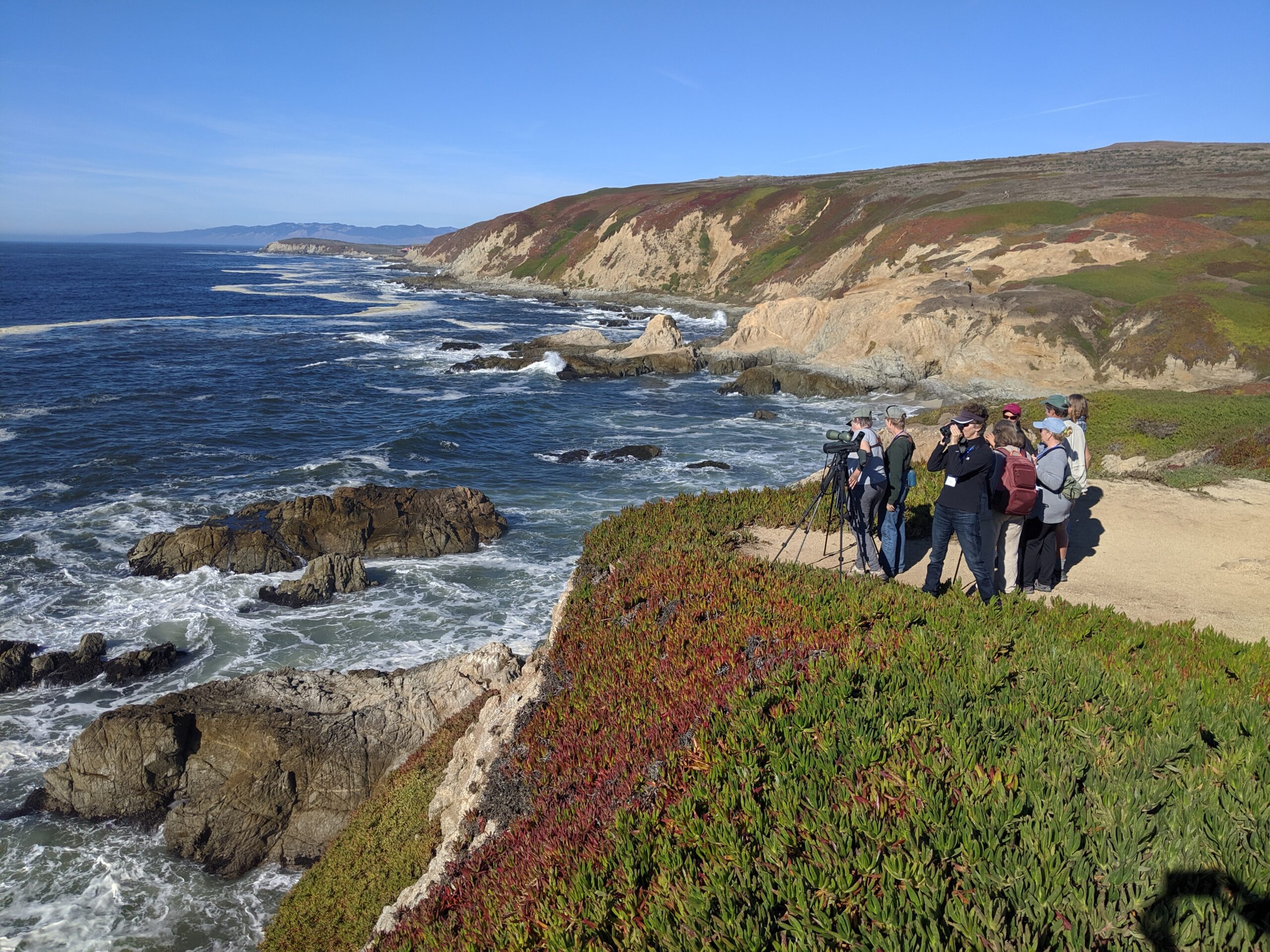
The project builds on an unusually long record collected through GFA’s Beach Watch program. Since 1993, volunteers have monitored more than 60 beaches along 210 miles of coastline, documenting beach conditions, wildlife, and human use, and taking repeat photographs of many of the same locations. These data provide a rare, consistent record spanning roughly a quarter of California’s coastline, and they have never been analyzed to understand long-term shoreline change.
Shifting Shorelines will digitize this historical record, and together with modern shoreline analysis and coastal modeling, reconstruct how beaches and dunes have changed over the past 30 years and evaluate how they may change in the future. The project will help identify patterns of erosion, accretion, and recovery across different types of beaches and use that information to better understand which shorelines may be more resilient to future change and where restoration or other adaptation strategies could be most effective.
The project will also connect physical changes in the shoreline with decades of wildlife observations, allowing us to examine how changes in beach and dune habitat affect shorebirds and other wildlife that depend on these dynamic coastal environments.
GFA will lead the project in partnership with Greater Farallones and Cordell Bank National Marine Sanctuaries, Point Blue Conservation Science, and the U.S. Geological Survey. Findings will be translated into maps, projections, and decision-support tools to help coastal managers prioritize restoration, habitat protection, and climate adaptation across north-central California.
The project is possible because Beach Watch volunteers have returned to these beaches year after year for more than three decades. Shifting Shorelines will turn that long-term record into a new source of information about how our coast has already changed and what that history can teach us about managing it into the future.