James Crowley Ocean Conservation Fund
Protecting One of Earth’s Most Extraordinary Marine Ecosystems
A Named Fund of the Greater Farallones Association
In Partnership with NOAA National Marine Sanctuaries
Greater Farallones · Cordell Bank · Monterey Bay
Just beyond the Golden Gate Bridge, one of the rarest and most productive ocean ecosystems on Earth pulses with life. The California coast is home to one of only four major deep-water upwelling zones in the world — a phenomenon that draws migrating animals from every corner of the Pacific Ocean, sustains extraordinary biodiversity, and shapes the health of the entire North Pacific.
THE JAMES CROWLEY OCEAN CONSERVATION FUND is a named fund of the Greater Farallones Association (GFA), established to deepen and extend GFA’s work by bridging the critical gap between federal protection and the private resources that conservation of this magnitude demands. All gifts to the Crowley Fund are received and stewarded by GFA, in support of its programs and mission.
The Place: One of Only Four
To understand why the James Crowley Ocean Conservation Fund exists, one must first understand what is being protected, and why it is irreplaceable.

One of Four Upwelling Zones on Earth
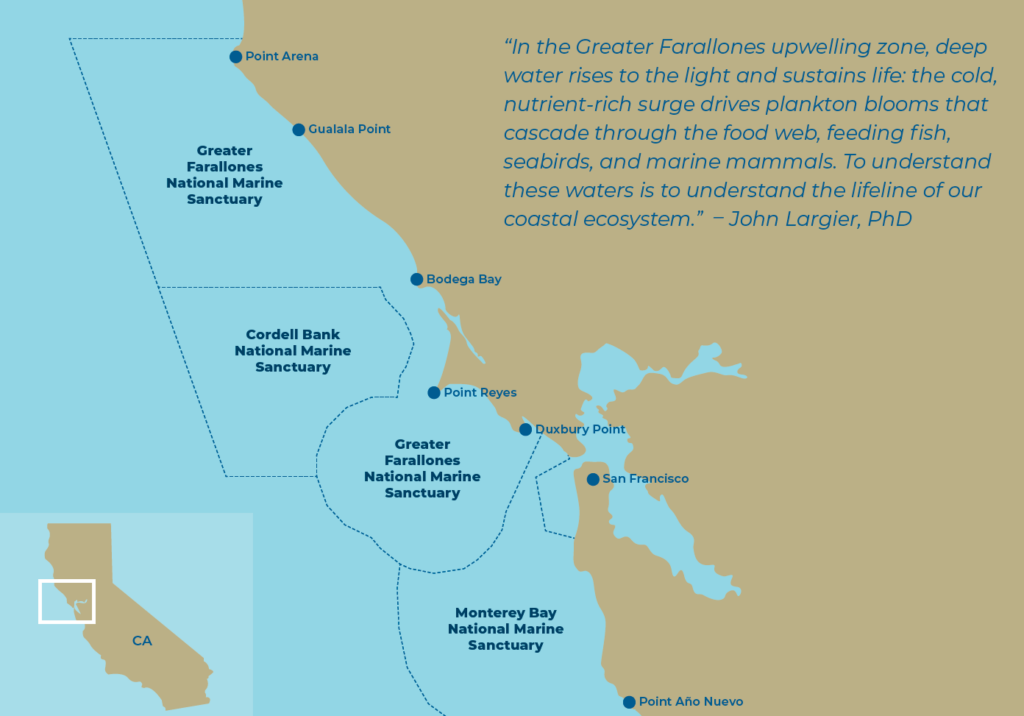
The California Current, which flows along the entire western coast of North America, creates the most intense upwelling site in North America. Wind-driven upwelling forces cold, nutrient-rich water from the deep ocean to the surface, triggering vast blooms of phytoplankton that feed the marine food web, from microscopic krill to the largest animals on the planet.
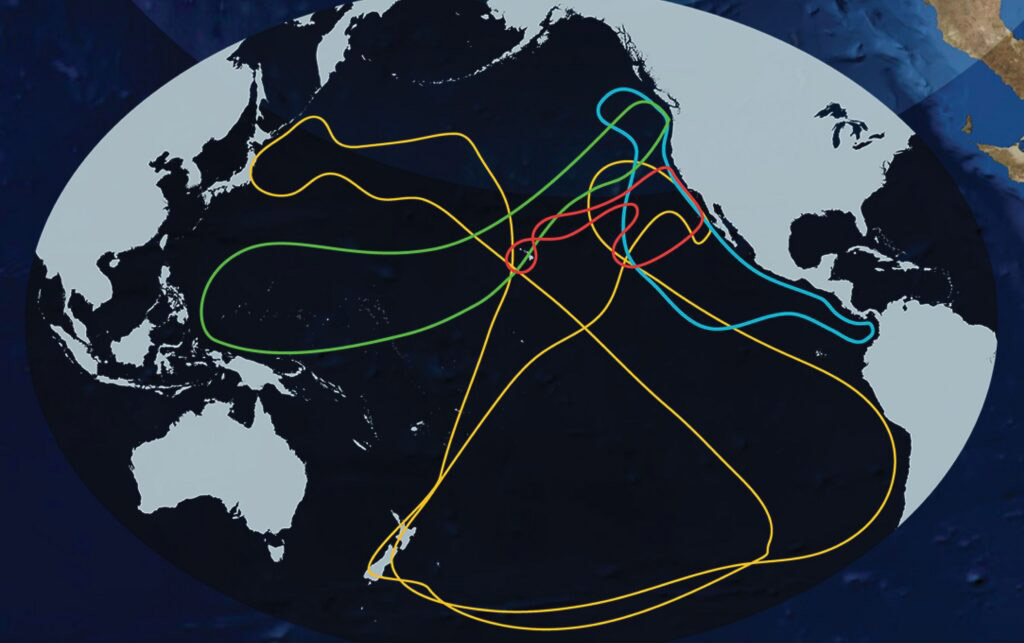
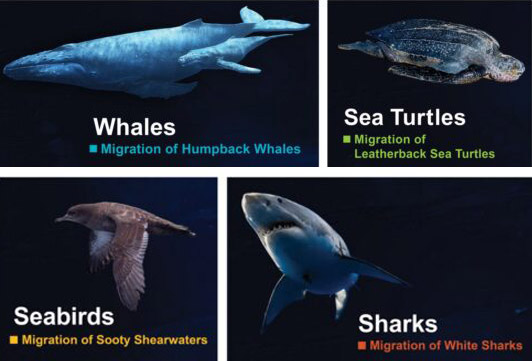
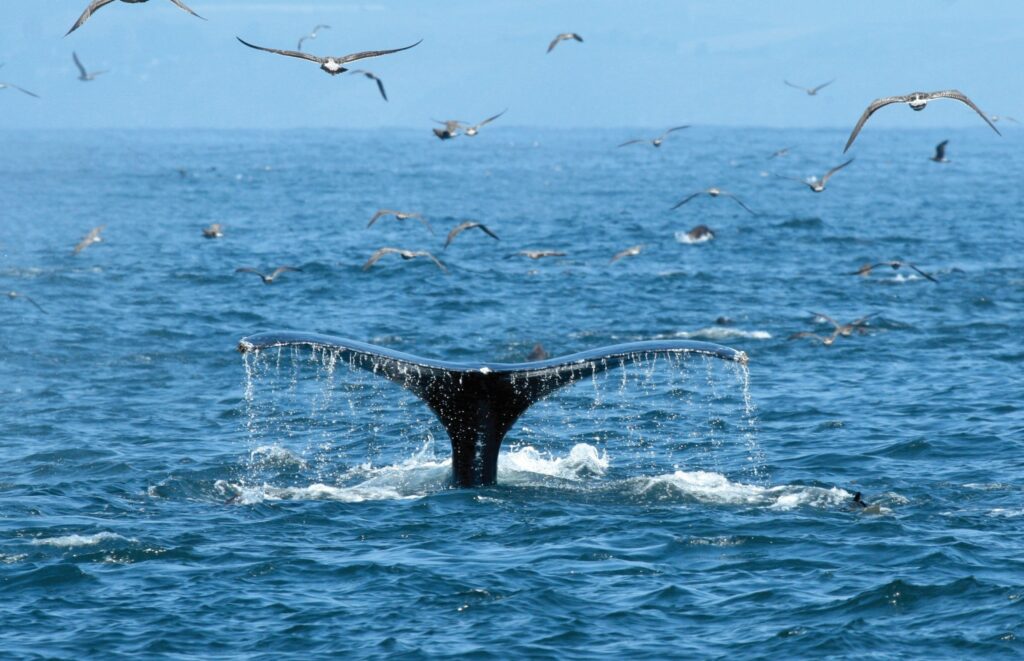
This is not a regional resource. The sanctuaries attract animals from across the entire Pacific Ocean. Humpback whales journey from Hawaii, Mexico, and Central America. Blue whales arrive from offshore feeding grounds thousands of miles away. Great white sharks, gray whales, Steller sea lions, and over 250,000 breeding seabirds all depend on the productivity of these waters. What happens here doesn’t stay here, it ripples across the entire Pacific ecosystem.
What the Sanctuaries Protect
Together, Greater Farallones, Cordell Bank, and northern Monterey Bay National Marine Sanctuaries protect an ecosystem of extraordinary scope:
5,600+ Square Miles Protected
Greater Farallones, Cordell Bank, and northern Monterey Bay combined
36 Marine Mammal Species
Including blue, gray, and humpback whales
1 of 4 Global Upwelling Zones
Among the most productive zones on Earth—a planetary rarity
Global Context: A Planetary Treasure
Greater Farallones and Cordell Bank National Marine Sanctuaries are part of the UNESCO Golden Gate Biosphere. The sanctuaries have been designated a global Hope Spot by Dr. Sylvia Earle and Mission Blue, which is a recognition reserved for marine areas considered vital to the health of the world’s oceans. They boast two United Nations Wetlands of International Importance for migratory birds. The California sanctuaries protect the most intense and important upwelling site in North America. They are also in our backyard, accessible from San Francisco and visible from the Golden Gate Bridge.
The sanctuaries await the kind of sustained global donor community that has made places like the Galápagos, Greater Barrier Reef, and Coral Triangle well known and well supported — places that are celebrated globally because of a sustained investment in science, storytelling, and philanthropy over decades. The California sanctuaries have the ecological distinction to earn the same recognition and support.
The James Crowley Ocean Conservation Fund at Greater Farallones Association is how that future gets built.
How the Fund Works: The Public-Private Model
Federal protection provides the legal framework, but it cannot fully fund the science, restoration, and education that a living sanctuary requires. The Greater Farallones Association, founded in 1995, serves as the indispensable private partner to NOAA, funding foundational science, innovative kelp restoration, community science programs, and immersive environmental education that federal appropriations alone cannot sustain.
The Crowley Fund is a named philanthropic fund within GFA. It is the mechanism by which private generosity amplifies GFA’s public investment mandate, filling the gap between what is federally appropriated and what the ecosystem actually needs. Gifts to the Crowley Fund are board-designated to support GFA’s highest conservation priorities to make the greatest impact on science-led conservation initiatives and public policy guidance. No other philanthropic vehicle does this for all three sanctuaries combined.
Why Now: The Urgency
These sanctuaries face accelerating threats. The Crowley Fund’s support is not aspirational — IT IS URGENT.
Kelp Forest Collapse
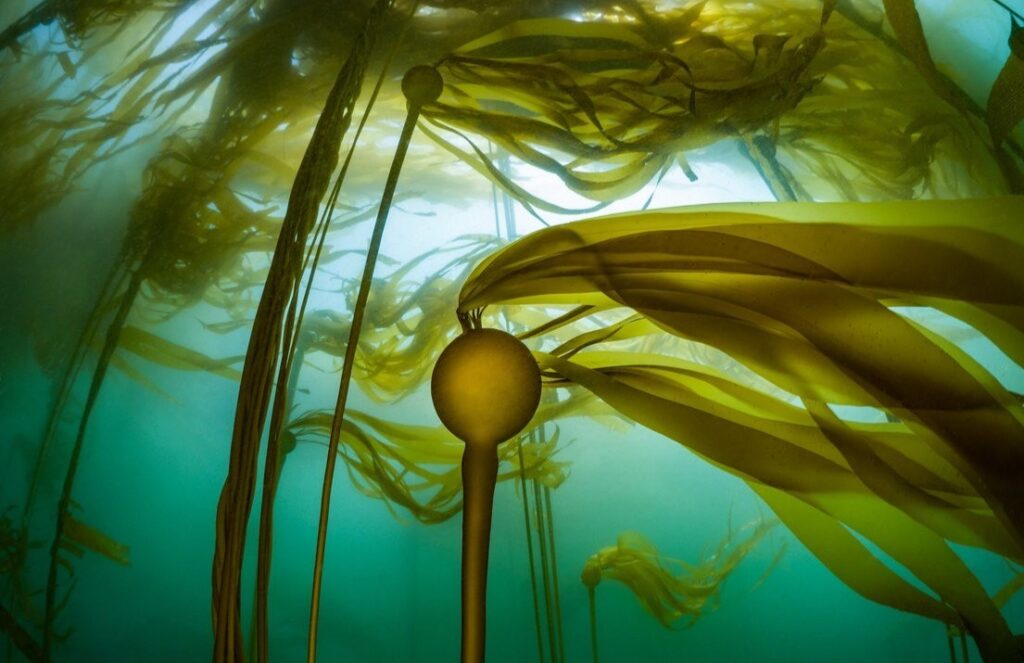
Some areas within the sanctuary have seen kelp forest cover decline by over 90% in the past decade, driven by marine heat waves, sea urchin overpopulation, and the loss of sunflower sea stars. Kelp forests are the rainforests of the sea: nurseries for fish, carbon sinks, and habitat for hundreds of species. GFA’s Kelp Restoration Program is among the most innovative recovery efforts worldwide.
Climate Change & Ocean Acidification
Rising ocean temperatures are shifting species distributions, altering oceanographic patterns, and disrupting food webs that makes these ecosystems so productive. Scientific models indicate that these sanctuaries will become even more critical habitat for marine wildlife. Long-term scientific monitoring to validate these models and ensure continued protections requires continuity of funding that federal budgets alone cannot guarantee.
Ship Strikes on Whales
Major shipping lanes cross directly through the sanctuaries, and vessel strikes are a leading cause of blue and humpback whale mortality in California waters. Research-driven advocacy and partnering for shipping lane adjustments requires the kind of sustained, independent scientific work that the Crowley Fund enables.
Marine Debris & Plastic Pollution
Like many other places around the world, the California sanctuaries face a growing tide of plastic pollution. Monitoring, removal, and policy advocacy all require resources beyond federal appropriations.
Be Part of This Legacy: The Moment Is Now
The California sanctuaries await the community that will tell the story of their increasing global significance, and drive support for its future.
NOAA’s sanctuary system creates the legal framework. The Greater Farallones Association provides the science and the stewardship. The James Crowley Ocean Conservation Fund at GFA is where your generosity meets all of this, and makes it endure. Assets in the Crowley Fund are professionally invested and stewarded for long-term preservation and growth, helping sustain ocean conservation for generations to come.
“There is hope in the resilience of this cold-water environment. Putting a healthy ocean at the heart of decision making is essential so that effective protection of coastal marine carbon cycles, sinks, and reservoirs can help mitigate the effects of climate change and support biodiversity.” — Dr. Sylvia Earle, Founder, Mission Blue
Support the James Crowley Ocean Conservation Fund Today
For interest in contributing to the James Crowley Ocean Conservation Fund reach out to donate@farallones.org.